
Understanding the lifespan of industrial pneumatic torque wrenches Many professionals ask how long pneumatic tools...
Read MoreHow Does a Pneumatic Torque Wrench Work? Industrial Applications Explained
How does a pneumatic torque wrench work? RAD Torque Systems explains.
A pneumatic torque wrench uses compressed air to generate controlled torque, allowing operators to tighten fasteners accurately and consistently in industrial environments.
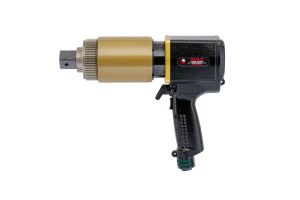 What Is a Pneumatic Torque Wrench?
A pneumatic torque wrench is an air-powered tool designed to apply a precise amount of torque to a bolt or nut using compressed air. It ensures accurate fastening while reducing the risk of under- or over-tightening in industrial applications.
Operators set a target torque value, and the tool uses an internal air motor and gearbox to deliver consistent, controlled torque—critical for safety, performance, and reliability in demanding environments.
How Does a Pneumatic Torque Wrench Work?
A pneumatic torque wrench operates using compressed air as its power source.
Here’s how it works:
- Compressed air supply
Air is delivered through a hose connected to the tool. - Air motor activation
The compressed air powers an internal motor inside the wrench. - Gear reduction system
The motor drives a planetary gearbox that multiplies torque output while maintaining control. - Torque application
The output drive applies torque directly to the fastener. - Torque control
The operator sets the desired torque, and the tool delivers consistent output to reach that value.
This system allows pneumatic torque wrenches to deliver high torque with minimal physical effort, making them ideal for demanding industrial use.
Other Types of Industrial Torque Wrenches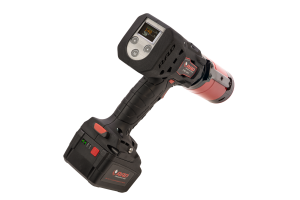
While pneumatic tools are widely used, other types include:
- Click torque wrenches – Mechanical tools that signal when torque is reached
- Digital torque wrenches – Electronic and battery tools that measure and display torque in real time
- Hydraulic torque wrenches – High-force tools used in heavy-duty bolting applications
Each serves a purpose, but pneumatic torque wrenches stand out for their speed, reliability, and continuous operation capability.
Industrial Torque Wrench Applications
Industrial torque wrench applications span multiple industries where precision and reliability are critical:
- Automotive – Engine assembly, suspension systems
- Aerospace – Aircraft engines, landing gear systems
- Construction – Structural steel, bridge assembly
- Manufacturing – Machinery and equipment assembly
- Mining – Haul truck wheel nuts, heavy equipment maintenance, remote site repairs
- Oil and gas – Pipelines, flanges, and wellheads
- Marine – Ship engines and propulsion systems
In these environments, consistent torque application directly impacts safety, uptime, and equipment lifespan.
Why Pneumatic Torque Wrenches Are Used
Pneumatic torque wrenches are preferred in industrial settings because they offer:
- High torque output for large fasteners
- Faster operation compared to manual tools
- Reduced operator fatigue
- Consistent and repeatable torque results
Their ability to perform reliably under continuous use makes them a key tool in industrial torque wrench applications.
Summary
A pneumatic torque wrench works by converting compressed air into controlled mechanical torque through an internal motor and gearbox system.
This makes it one of the most efficient and reliable solutions for industrial torque wrench applications where precision and durability are essential.
Reliable Industrial Torque Wrench: RAD Tools Built to Last
RAD Torque Systems delivers reliable industrial torque wrench performance daily. At RAD Torque Systems, durability...
Read More
The Critical Role of Torque Tools in Data Center Pipe Fitting
In today’s data-driven world, data center infrastructure is the backbone of global connectivity, cloud services, and...
Read More